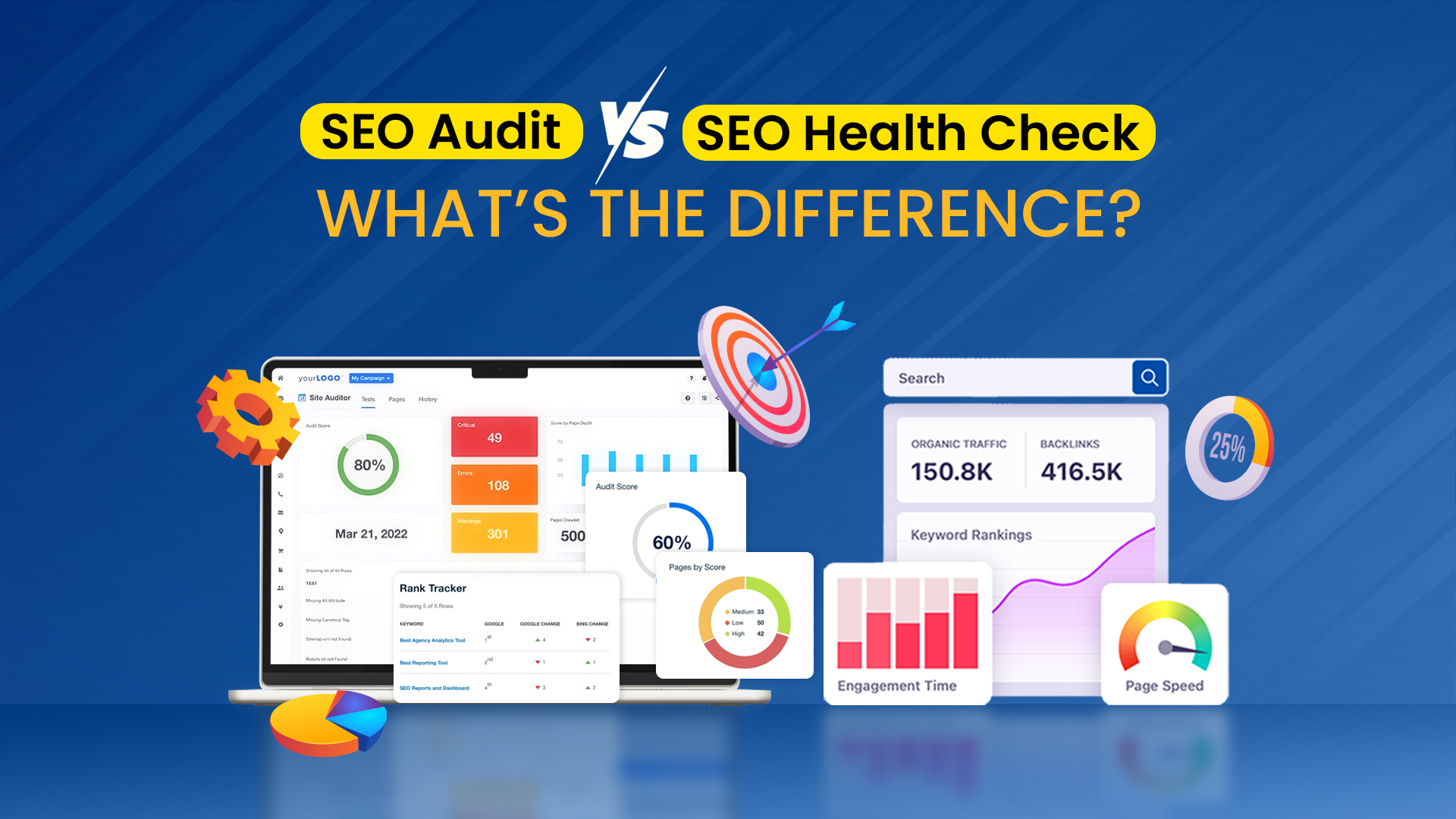

If you’re managing a website or running a business online, you’ve probably come across terms like SEO Audit and SEO Health Check. Both sound technical and important, which they are.
A website is only as healthy as the strategy behind its visibility.
But the thing is, they’re not the same. Confusing one for the other can lead to gaps in your SEO strategy, missed opportunities, or even performance issues that go unnoticed.
Whether you’re noticing a dip in traffic or just want to ensure your site stays visible and competitive, understanding the difference between an audit and a health check can give you the clarity to take the right step at the right time.
Let’s break it down in the simplest, most actionable way possible.
What exactly is an SEO Audit?
Think of an SEO audit as your website’s comprehensive medical check-up.
It goes deep, analyzing everything from your site’s internal structure to how it’s perceived by search engines. The audit looks at technical SEO like your website’s architecture, crawlability, page speed, mobile responsiveness, and overall user experience.
It doesn’t stop there.
An audit also reviews your content, evaluating keyword usage, content quality, and internal linking structures. Then comes the backlink analysis, where the quality, quantity, and relevance of external links pointing to your site are scrutinized.
It also covers both on-page and off-page SEO elements, meta descriptions, alt texts, header tags, and social signals.
The result?
You get a full-picture view of your site’s strengths and weaknesses, along with a list of strategic recommendations. These insights can shape your next six to twelve months of SEO work, whether that means improving site speed, rewriting content, or building better backlinks.
Ideally, this type of audit should be done once a year, or after any major change, like a website migration, rebranding, or a sudden traffic drop.
Why go this deep?
Because search engines are constantly evolving. And without a comprehensive review, your website might silently slip out of visibility. A detailed audit ensures your foundation is strong and aligned with current best practices, keeping your SEO strategy relevant and results-focused.
So, what is an SEO Health Check then?
A health check is more about monitoring than diagnosing. It focuses on key performance indicators, the essentials that keep your site running smoothly in the eyes of both users and search engines.
You check your Core Web Vitals, page speed, mobile usability, and loading stability. Then, you scan your on-page SEO elements like title tags and meta descriptions to ensure they’re still optimized and consistent.
A health check will also highlight immediate issues through tools like Google Search Console, things like broken links, sudden traffic dips, or crawling errors.
It’s designed to be quick and routine, performed monthly or quarterly, so you can catch and resolve small problems before they grow into big ones.
Why is this regular check-in important?
Because SEO is a dynamic field. Even minor changes in algorithm behavior or competitor activity can impact your site’s performance. A health check keeps you proactive, rather than reactive, and ensures your SEO efforts are continuously aligned with your goals.
Understanding the Key Differences
By now, it’s clear that SEO audits and health checks are not interchangeable. They serve different purposes, and knowing which one to use and when can save time, money, and missed opportunities.
Let’s explore what sets them apart.
Scope of Work
An SEO audit examines every layer of your website’s search performance, from crawlability and mobile optimization to content gaps and backlink profiles. It’s an extensive process, designed to uncover hidden issues and identify strategic growth areas.
In contrast, an SEO health check is a quick check-in. It monitors essential performance metrics like page speed, mobile usability, title tags, and keyword drops. You won’t get a full strategy, but you’ll know exactly where urgent attention is needed.
Time and Cost
Naturally, a comprehensive audit takes more time. It often involves advanced tools, skilled analysis, and cross-functional SEO expertise. As such, it can be more resource-intensive, whether you’re doing it in-house or hiring an expert.
A health check, however, is faster and more budget-friendly. It’s designed for quick assessments and immediate fixes, making it a smart choice for smaller teams or ongoing performance monitoring.
Outcomes and Insights
From an audit, you walk away with a strategic roadmap, actionable recommendations that can transform your SEO over the long term. You’ll know what’s working, what’s broken, and where the biggest growth potential lies.
With a health check, the focus is on fast fixes. Think of it as your early-warning system. It helps you catch red flags early, before they grow into something that affects your traffic or user experience.
Frequency of Use
Audits aren’t something you do every month. They’re best used occasionally, maybe once a year, or after big updates like a site migration or a major SEO shift.
Health checks, on the other hand, are part of a routine maintenance cycle. Monthly or quarterly reviews ensure your site stays in good shape and performs consistently.
Who Should Use Each One
Larger businesses, enterprise websites, or anyone planning a big SEO overhaul will benefit more from a comprehensive audit. It lays the groundwork for serious growth.
But if you’re a small business owner, managing an established site, or running light SEO updates, a health check is the smart, efficient option to stay on track.
When Should You Choose One Over the Other?
Still unsure whether your site needs an audit or a health check? Here’s a simple way to decide based on your current situation.
Choose an SEO Audit if…
- You’ve recently redesigned your website or migrated to a new domain.
- Your organic traffic has dropped significantly, and you’re not sure why.
- You haven’t done a deep SEO analysis in over a year.
- You’re preparing for a full-scale SEO campaign and need a solid foundation.
Choose an SEO Health Check if…
- You notice slower page speed or increased bounce rates.
- You want to ensure you’re hitting Google’s Core Web Vitals.
- You’ve made minor updates and want to make sure nothing’s broken.
- You prefer monthly or quarterly reviews to avoid sudden SEO surprises.
Why They Work Better Together
In SEO, you don’t have to choose one over the other. The real magic happens when you use both, because they serve different purposes, but work toward the same goal: better visibility, smoother performance, and long-term growth.
An SEO audit helps you see the full picture; it uncovers everything from technical issues to content strategy weaknesses. It’s your strategic blueprint. A health check, meanwhile, keeps your site on track day to day. It’s like a regular pulse check to make sure nothing’s going off course.
A smart approach is to combine a thorough SEO audit every 6 to 12 months with monthly or quarterly health checks. This way, you’ll catch the big issues before they become disasters, and you’ll stay agile when small things shift, like Google’s algorithm updates or new SEO best practices.
How to Do It: A Simple Breakdown
Here’s how you can conduct both types of checks, even if you’re not an expert.
To Run an SEO Audit:
Start with a complete checklist. Look at:
- Technical SEO: Site speed, mobile responsiveness, crawl errors
- On-page SEO: Keyword optimization, title tags, internal links
- Content: Quality, structure, keyword intent
- Backlinks: Quality, relevance, and anchor text diversity
Use tools like Ahrefs, SEMrush, Screaming Frog, or Google Search Console to uncover insights.
Once your audit is done, organize your findings into an actionable report. Focus on prioritizing the changes: what’s urgent, what can wait, and what aligns with your goals.
To Perform a Quick SEO Health Check:
Use tools like Google PageSpeed Insights, GTMetrix, or Lighthouse to check loading times.
Look at your Core Web Vitals, mobile compatibility, and any glaring issues, like broken links, 404 errors, missing meta descriptions, or slow server response times.
Use Google Search Console for red flags, like sudden keyword drops or crawling issues.
Fix what’s easy and important first: update titles, remove broken links, compress images, and improve page speed. These small fixes often lead to noticeable performance gains.
And yes, many of these tools are free or have free versions. Start there.
Choosing What Your Website Needs
Your website doesn’t just need to look good, it needs to work well, too.
An SEO audit gives you a full picture of what’s working and what’s not.
A health check helps you stay on top of small issues before they turn into big problems.
Each one plays an important role, and together, they keep your site strong, stable, and ready to perform.
If you’re not sure what your website needs right now, start small.
And if you ever need help figuring it out, we are always here to guide you in the right direction.
 From groundbreaking software to cutting-edge applications, we turn your ideas into reality.
 Our expert team crafts solutions that exceed expectations, boosting efficiency and solving real-world problems.
 Whether you’re a startup revolutionizing the market or an established enterprise, we’re here to fuel your success.